Healthcare workers are essential. NYC nurse strike is proof

Our health care system shifts risk downward and profit upward. It breaks bodies at the bedside while protecting balance sheets in the boardroom. It leaves nurses uninsured, assaulted and exhausted.
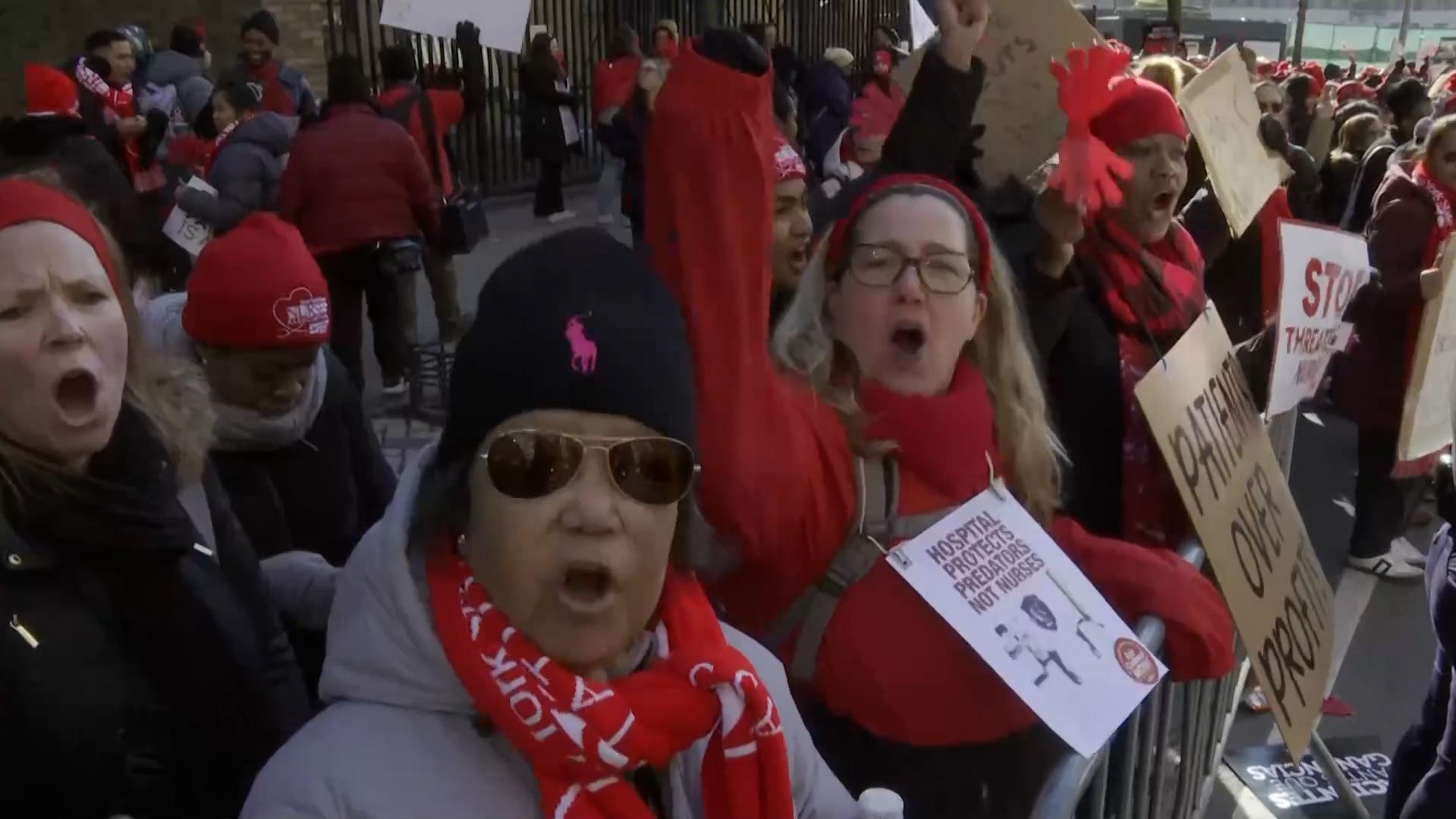

15,000 nurses on strike in New York City demanding safer conditions
Nurses are demanding higher pay and safer conditions from Mount Sinai and New York-Presbyterian hospitals.
It’s been weeks since 15,000 New York City nurses began their Jan. 12 strike, holding the line for the most basic standards of safety and care: enforceable staffing ratios, real on-unit security, paid health care for health care workers and protections against workplace violence. These are not radical demands. They are the bare minimum required to keep patients and nurses safe and alive.
After 31 years as a registered nurse working in the trenches of humanity, I have come to understand something deeply disturbing. The health care system is not failing.
Sure, it is failing us – the people who give care and the people who need it. But it is succeeding spectacularly for those at the top.
When people say the system is “broken,” they are speaking from lived harm: delayed care, burnout, violence, injury, debt and moral distress. That harm is real. I have lived it. I have watched patients suffer needlessly, colleagues burn out and health care workers go without care themselves. But calling the system “broken” suggests malfunction. After three decades inside the system, I know this is not malfunction. It is design.
That design shifts risk downward and profit upward. It breaks bodies at the bedside while protecting balance sheets in the boardroom, letting health care CEOs earn tens of millions of dollars a year.
In a functioning health care system, illness would be treated as a shared human responsibility and healing would be the goal. In the United States, disease has instead been transformed into a revenue stream. Insurance companies, pharmaceutical corporations, hospital systems and staffing agencies extract profit not from wellness but from ongoing illness, dependency and delay. Care is rationed not by medical need but by profitability. Treatments require approval, medications are tiered, networks are narrow and patients are told they have “choices” even when every option carries financial risk.
Nurses aren’t silent, they’re unprotected
Perhaps the cruelest contradiction is that health care workers are trapped inside the very system they hold up. From my experiences and the experiences of co-workers, I know benefits can vary widely.
As a staff nurse, I paid biweekly premiums for employer-sponsored health insurance. Travel nurses often pay weekly premiums tied to short-term contracts or are offered no medical insurance. Per diem nurses and some other types of health care workers receive no health benefits whatsoever – no medical coverage, no prescription coverage and no protection if they are injured, assaulted or become ill.
Hospitals rely heavily on per diem staff to fill chronic staffing gaps, maintain flexibility and reduce labor costs while offering them zero health care benefits. This is not an oversight; it is a cost-saving strategy. A system that depends on health care workers while refusing to insure them is not efficient. It is exploitative.
Acts of violence against nurses often go unreported. But the biggest failure isn’t nurses not relaying information about attacks and other incidents, it’s what happens after a report is filed.
Reports are logged, meetings are held and emails are sent, yet the conditions that allowed the violence to occur – short staffing, delayed response times and lack of on-unit security – often remain unchanged. Reporting becomes a record of harm rather than a mechanism for prevention. Nurses are not silent; they are unprotected.
Health care violence is often described as unpredictable, a word that minimizes reality. According to data cited by the U.S. Bureau of Labor Statistics and multiple peer-reviewed studies, nurses and health care workers experience higher rates of workplace violence than prison guards and police officers.
Violence can occur within seconds during ordinary moments of care. I was working in a CT scan holding area when a patient asked to use a phone. My co-worker, trying to be kind, allowed him to use the unit phone. When she later asked him to get off the phone so care could continue, he refused and struck her in the face with the telephone handle. I was there, and there was no escalation period, no warning signs and no time to call security. The violence did not build; it arrived.
In another incident, a nurse performing a routine procedure – removing a Foley catheter from a male patient – was suddenly attacked. Within minutes, the patient became violently aggressive and beat the nurse so severely that she sustained catastrophic brain trauma and was left in a coma. This did not happen during a chaotic emergency; it happened during ordinary care.
After assaults, nurses often return to the same unit with the same ratios and the same lack of protection, only now with paperwork completed. Documentation without systemic change is not safety; it is liability management.
Nurses on strike refuse to be expendable
This is why NYC nurses are striking. The strike is not a narrow dispute over compensation; it is a demand for basic dignity and safety in a system where priorities have become grotesquely inverted. Nurses are asking why hospital CEOs can earn $25 million a year while the people providing hands-on care cannot secure paid health care for themselves, safe staffing levels, real breaks or meaningful security protections.
Nurses are in the thick of every interaction – absorbing grief, managing crises, de-escalating violence and keeping patients alive minute by minute. Hospital CEOs, by contrast, are far removed from the realities of bedside care. They do not stand alone in understaffed units, face physical assault or carry the moral injury of being unable to provide safe care because resources have been stripped away.
Yet hospitals continue to fund executive compensation, expansion projects and strike-breaking staffing agencies.
I stand with the striking NYC nurses who refuse to accept exhaustion, injury and disposability as the cost of care. They are making a declaration that health care workers are not expendable and that patient safety is not negotiable.
Your fight is seen, your demands are justified and your solidarity is shaping the future of health care for all of us.
Christine Villabona-Kuntz has been a nurse for 31 years and lives in Delaware. She’s working on a book about health care.
link