“The ability to get ahead”: Australian parent perspectives on genomics in newborn screening and considerations for potential models of care
Response rate and participant characteristics
Of 43 individuals who were eligible and approached to participate, 23 consented to participate in the study (response 53%) representing 22 families (including one dyad). Parent and child demographics are summarised in Tables 1 and 2. 22/23 demographic data sheets were returned, with some parents choosing to omit data elements.
The psychosocial impact of receiving a genomic diagnosis
The newborn period was described as a unique and highly vulnerable time (Table 3). Emotions such as anxiety, grief, stress and sadness were exacerbated by receiving a genetic diagnosis and access to psychosocial care was described as necessary for successful implementation of genomic NBS. Despite these feelings, no parents indicated regret at pursuing a genetic diagnosis for their child. Almost half of parents (9/23) reflected on how information gained from a genetic diagnosis empowered their family to prioritise life goals, pursue meaningful activities and create memories, often strengthening the parent-child and sibling relationship (Quote 3.1). In contrast, parents also experienced feelings of distress if a diagnosis was not supported by appropriate education or individualised care, leaving parents unable to use the information proactively; parents felt this could be ameliorated by access to information from their healthcare team, with the role of a genetic counsellor for information provision being highlighted. Feelings of self-blame were identified by some parents as a particular aspect of their child being diagnosed with a potentially inherited genetic condition (Quote 3.2), with one parent reflecting on the potential for an older siblings’ condition to have progressed beyond the optimal therapeutic window due to not having genetic knowledge earlier. A few parents were also hesitant to pursue genetic testing or disclose results beyond the child/parents. Concerns were elevated for some parents when considering the potential for misuse of genomic data, with fears of social and financial discrimination if legal safeguards were not pre-emptively established.
Despite early access to diagnosis and often presymptomatic treatment, over half of parents (16/23) continued to experience pre-emptive grief or anxiety of symptom progression. This had the potential to deny families comfort, causing hypervigilance and in some cases, disrupting the child-parent bond (Quote 3.3). Uncertainty and grief were heavily associated with diagnoses of rare, ultra-rare, under researched, and unpredictable conditions, but did not appear to be associated with the presence or absence of effective treatments. Feelings of loss for the future they envisioned for their child and family caused personal strain for most participants, with one parent describing marital strain due to differences in coping styles with their partner (Quote 3.4). Most parents deliberated the psychosocial impact of diagnostic information, the majority of which felt the benefits outweighed the risks, in particular preventing guilt and self-blame for missing symptoms, and “what if?” questions of a later diagnosis (Quote 3.5).
Increased psychosocial risks of genetic NBS were associated with false positive or negative screening results. Parents emphasised the need for genetic counselling and continued psychosocial intervention to mitigate psychosocial risks and erosion of public confidence in future genomic NBS programs. For one parent whose child received a false negative result, the impression of disease absence caused prolonged information seeking and misdiagnosis, and negatively impacted family time, parental employment, finances and family wellbeing. For the parent whose child received a false positive NBS result, the investigative burden on the child was considerable, and caused significant grief and had the potential to interfere with early child-parent bonding.
Considering the process of consent, disclosure and information provision
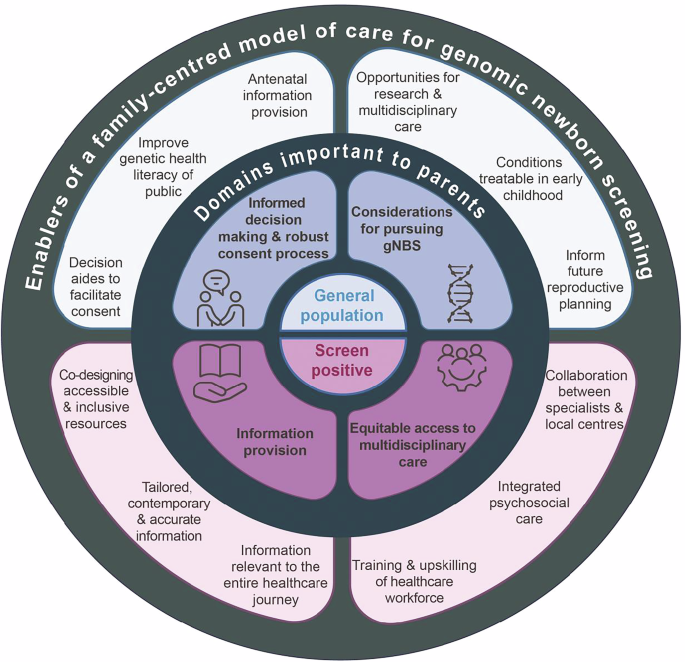
Parents felt the psychosocial ramifications of a genetic diagnosis could be supported by tailored and easily accessible information at the time of consenting to NBS, at point of screening and diagnostic disclosure (Table 4). Nearly all parents struggled recalling current NBS consent processes, aside from acceptance of its routine nature, with many unsure what they were consenting to. Half of the parents expressed preference for antenatal education and consent, to allow time for informed decision-making (Quote 4.1).
Whilst most parents advocated for disclosure of all screening results within the newborn stage, some acknowledged a ‘data dump’ could cause overwhelm and worry for conditions not immediately actionable (Quotes 4.2 & 4.3). To counter this, parents suggested using genomic information as a lifetime data repository, to be disclosed across the lifespan, acknowledging this would place responsibility on healthcare services to retrieve and disclose genetic information at appropriate intervals.
Overall genetic literacy varied across parents, with some identifying the need to upskill the general population on the potential risks and benefits of genomic testing before informed consent was achievable (Quote 4.4). Parents found it challenging to distinguish between genetic screening for individual conditions and interrogating the entire genetic code or a panel of genes for selected conditions. Many agreed that genomic NBS panels would need to be flexible to reflect the dynamic therapeutic environment. To enable this, two parents proposed a two-tier consent system with a core panel of conditions amenable to treatment, and an optional panel including conditions without treatment and/or later onset phenotypes. Despite these perspectives and proposed strategies, deliberation and uncertainty were evident in parents’ responses.
Providing equitable access to care, information and support
Parents valued the ability of genomic NBS to provide diagnoses independent of sociodemographic characteristics, familial health literacy, or condition prevalence (Table 5). A strong sense of ethical maleficence was associated with jurisdictional differences in NBS programs (Quote 5.1). Equitable access to timely and appropriate care from screening through to diagnostic confirmation and multidisciplinary management spanning the child’s life was strongly advocated by almost half of those interviewed (9/23), particularly for those in regional and remote areas. Knowledge sharing between specialist hubs and local medical practitioners was deemed necessary to allow care close to home, with acknowledgement that centres of excellence were essential to provide this level of expertise and intervention. Upskilling the regional and rural workforce for genetic counselling, allied health therapies, and psychosocial services, were considered equally important as access to medical treatments (Quote 5.2).
Parents perceived an intrinsic link between their own well-being and ability to support their child’s needs, with tailored support deemed essential to minimising carer burnout (Quote 5.3). Almost half of parents (10/23) described intensive information seeking after receiving screening and diagnostic results (Quote 5.4), and highlighted the lack of available well curated, easily accessible and comprehensive information resources. Parents hypothesised that without access to information and ongoing support as part of genomic NBS pathways, this could lead to substantial psychosocial harms and erosion of public confidence in NBS programs. Of the portion of parents who felt there was a need for information resources, this mostly related to an overview of the affected child and condition specific information (Quote 5.5).
Privacy and data access were also raised as concerns. Access to individuals’ genetic data and data mining from insurance companies were considered as issues requiring careful consideration and regulation. A few parents likened genomic NBS to ‘playing God’ and there were concerns that using this information for future reproductive planning and potentially eliminating certain conditions could reduce social diversity. Finally, when discussing a child’s right to determine how their genetic data is used, many felt it was their parental role to make that decision until their child reached adulthood. However, parents also recognised it as a question they had not previously considered and should interrogate more. To mitigate risks and optimise ethical processes, parents suggested effective and informed messaging, the ability to opt out of genomic NBS whilst still being able to access a routine panel of conditions, transparency regarding storage and access of genetic data, and education amongst the public to increase genetic health literacy (Quote 5.6).
A continuum of benefits of genomic NBS
Parents considered genomic NBS benefits from the perspective of the child, but also often from the perspective of the family as one indistinguishable unit (Table 6). Genetic knowledge, access to treatment and supportive services was seen as a continuum, facilitating engagement in leisure, education and work pursuits meaningful to the family. This knowledge also empowered parents’ decision-making regarding family adjustments to accommodate their child’s current and future needs (Quote 6.1 & 6.2) and for some facilitated early access to disability and advocacy groups, clinical surveillance of the child, treatment and research for siblings, and informing future reproductive decision-making of parents and wider family were identified as broader benefits.
Independent of diagnostic modality, parents conveyed unanimous support for introducing genomics into NBS, with a range of views as to the benefits. Over half of parents (15/23) discussed that they not only valued access to timely treatments that enhanced outcomes for the newborn (e.g. medication and therapy), but also opportunities to access research and non-therapeutic strategies (e.g. lifestyle changes), ability to anticipate the future, and opportunities for risk stratification and clinical surveillance for the child and family (Quote 6.3).
Over half of parents (15/23) emphasised the importance of genomic NBS in facilitating timely diagnoses and treatment, particularly for rare diseases where a lack of information, inequitable access to experts, and heterogeneous symptoms can delay diagnoses. The possibility to deliver targeted allied therapy supports, engage in symptom management and develop individualised plans for proactive care were perceived to minimise acute hospital admissions, reduce co-morbidities, and decrease the probability of end organ damage. In contrast, receiving an early diagnosis through genomic NBS without immediate recourse to treatment for their newborn was considered psychologically challenging and had the potential to change the risk-benefit profile for a few parents (Quote 6.4), however half of parents interviewed perceived that they would rather be equipped with genetic knowledge.
Finally, a quarter of participants (6/23) considered the benefits of genomic NBS to society and the wider health system. This included a preventative approach to care and reduced frequency and length of hospitalisations, which the parents assumed would reduce healthcare costs and could possibly allow resources to be redirected to proactive health services (Quotes 6.5 & 6.6).
Parents perspectives on the attributes of conditions that should be incorporated into genomic NBS
Relative to perceived benefits, parents deliberated around the inclusion criteria for conditions amenable to genomic NBS (Table 7). This was particularly true for conditions without current treatments, later and/or adult-onset phenotypes, or genetic screening results that would predict a risk of a disease in later life. Factors were weighed against one another, including disease severity and risk stratification, the ability to create time for acceptance and adjustment, enacting preventative care, and the ability to advocate for their child’s needs later in life (Quotes 7.1 & 7.2). If an earlier diagnosis would not change disease trajectory, a few parents felt it more useful and psychologically safe to pursue a diagnosis when their child exhibited symptoms. Of these parents, it was agreed that certainty of diagnosis and prognosis was important when considering conditions to be included in genomic NBS (Quote 7.3).
link