‘We Just Want Safety’: NYC Nurses Speak as Strike Drags On
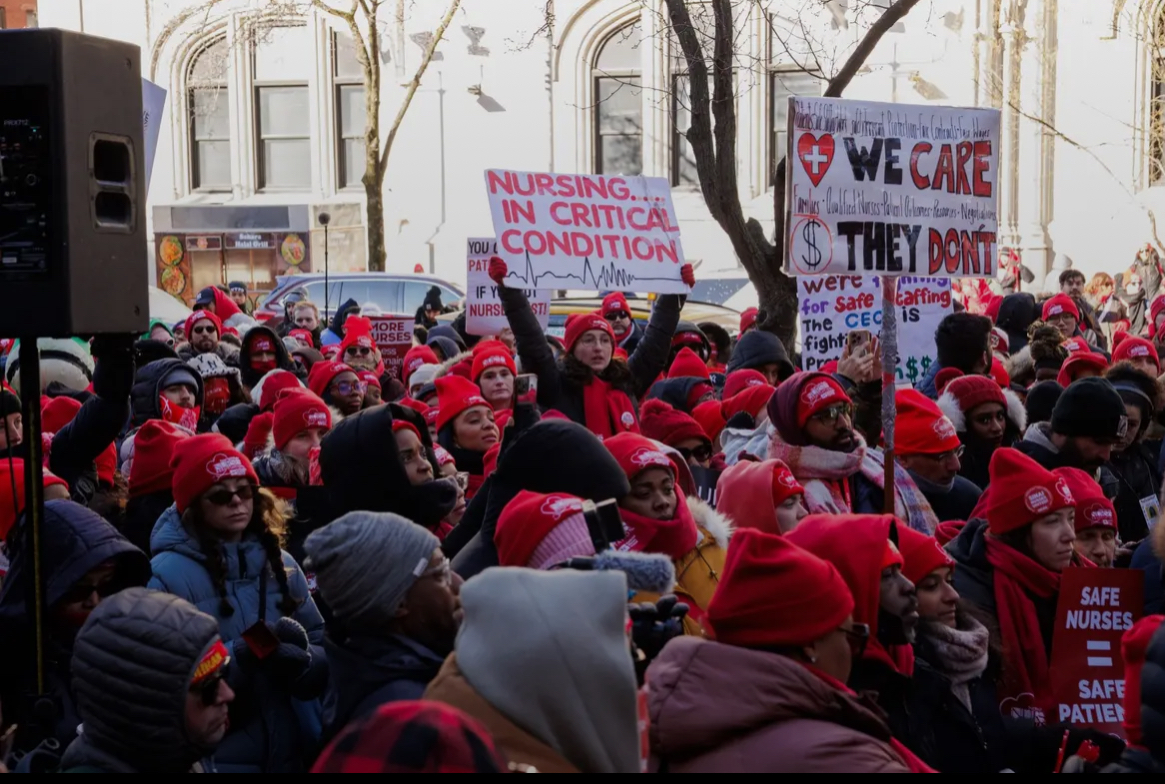
As the largest nursing strike in New York City’s history persists into its fourth week, DocWire News spoke with Dania Munoz, DNP, NP, RN, and Darla Joiner, RN, to provide a voice to the frontline nurses who are seeking safe staffing, strong and protected health benefits, increased wages, and enhanced workplace violence prevention.
A Historic Walkout Across Major NYC Health Systems
The strike, which comprises more than 15,000 nurses represented by the New York State Nurses Association (NYSNA), began on January 12, 2026, and targets three of the region’s major health systems—Montefiore Health, NewYork-Presbyterian Hospital, and Mount Sinai Hospital—the latter of which employs Dr. Munoz and Ms. Joiner, who expressed their concerns amid the ongoing back-and-forth. “We just want basic safety,” stated Ms. Joiner, who has been with Mount Sinai for 8 years. “We want our healthcare. We want to care for a safe number of patients.”
Staffing and Workplace Violence: The Core Nonnegotiables
Although an agreement was reached early on in the strike with respect to maintaining healthcare benefits, a concession that NYSNA described as “a major hurdle” being cleared, union leaders say that talks have stalled on the core issues: safe staffing and protection from workplace violence, two components that these frontline workers deem as “nonnegotiables” in making a deal.
“I know staffing is going to be a nonnegotiable, but that’s [just] one of them. We probably are going to have to make compromises there. Just meet middle ground, a safe working environment,” continued Ms. Joiner.
Hospitals Push Back on Costs and Security Claims
With respect to safety, the hospitals say that they have security protocols in place, and in terms of pay, they characterize the union’s wage demands as too expensive. Talks continue intermittently via mediation, and the union is negotiating with each hospital system separately. Also, not every hospital in these systems is strike affected. Other private networks have reached tentative deals with the union to avoid walkouts, and city-run public hospitals are unaffected. Yet for people like Dr. Munoz, who works in the ICU as a nurse practitioner, a key pain point she would like to see addressed amid this challenge boils down to respect.
“One of the things that I keep saying is ‘just respect for people.’ I think if [nurses] are telling you that these are the things that we need to improve our working conditions, not just because it impacts us as the workers, but we’re talking about something that also impacts our patients and even other workers in these institutions.”
The perception of hospital system disrespect is echoed by Ms. Joiner, who feels that “so much of our respect has been just disregarded.”
No Clear Endgame as Uncertainty Mounts
In terms of an endgame, neither side seems to have a concrete answer on when a solution will be reached, although negotiations continue with mediators, including all parties coming to the bargaining table at the Jacob K. Javits Convention Center on January 31, per the NYSNA. The hospitals, for their part, state unequivocally that they respect and value the part these nurses play, with NewYork-Presbyterian saying that its goal is “to reach a fair and reasonable agreement with union leadership that reflects our respect for the important role our nurses play.”
Ultimately, nurses like Dr. Munoz and Ms. Joiner are currently living in a state of uncertainty. “Everyone keeps asking, ‘When are you guys going to go back inside?’ And I’m like, ‘If I could tell you that we’re going back on Monday, I would,” said Dr. Munoz. “But we don’t know. We really don’t know.”
This story was also covered in depth by our sister site, Cancer Nursing Today, published on Friday, January 30.
link